





















































































Tonight
Ten for the evening
One to ten. Newest, most watched, highest on the Living Meter. Prime, Disney+, Hulu, Hallmark, Acorn, and Netflix.
The early years love the family. The long years love the joke more.
For a few years this was the best writing on television about a family that was not rich and not leaving. Then it became an instrument that could only play mockery, and a civilization that learns to speak in that instrument gets mean in the mouth. Watch the early seasons if you want the family. Do not let the later voice correct your children.
Industry
5/10
Homer has a job at the plant. Marge keeps the house. The job is a joke that used to be a fact.
Household
6/10
They remain a family. That was the radical part, and it frayed into a formula.
Piety
2/10
Church is a gag most weeks.
Courage
3/10
The courage is Lisa's, when the writers still let her be right without being the scold.
Republic
4/10
A town full of institutions, all of them corrupt or absurd.
Temperance
3/10
Satire became the house style and then the only food.
Truth
5/10
Early episodes tell a recognizable truth about a class and a marriage.
Stewardship
3/10
It has been handing the same joke down for decades. The joke got tired. The influence did not.
Live historicallyIf the show is on, pick a year before the joke ate the father, or pick something else.
They stay. That loyalty is real. The joke is very often the bed.
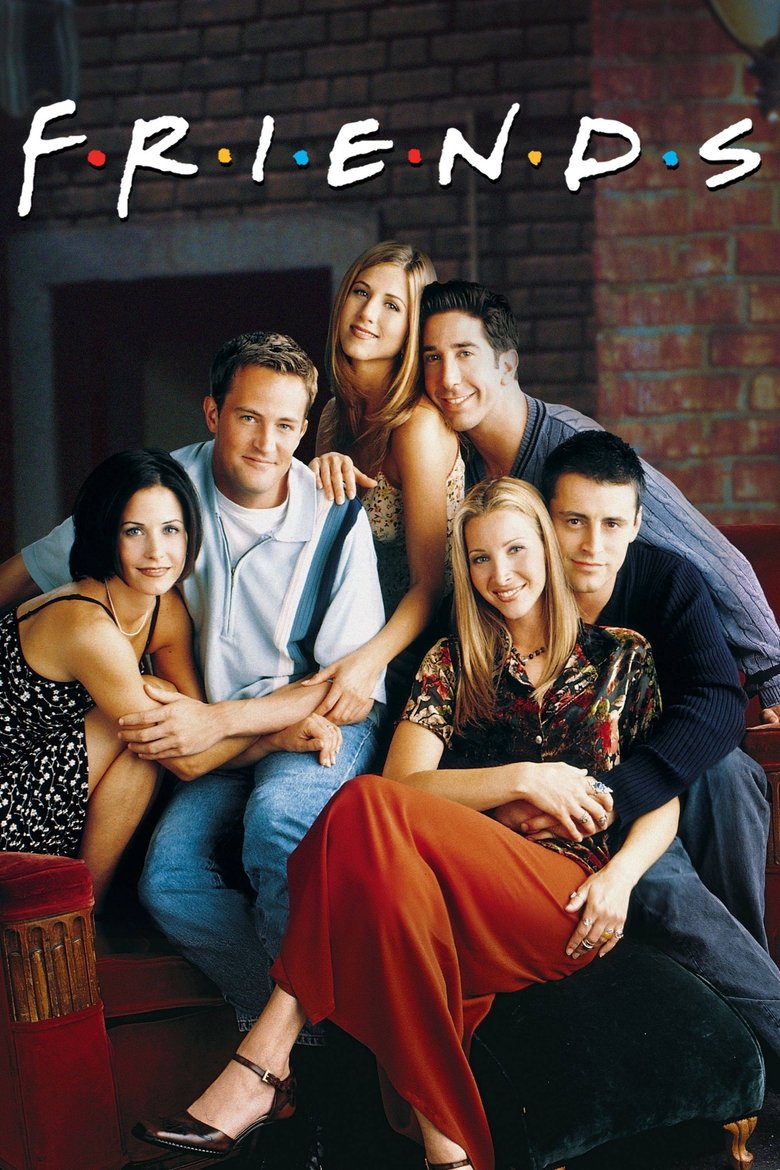
The reason people stayed for ten years is that the six of them do not leave. That is a picture of friendship as a daily fact, and it is the part a house can use. The engine of the episodes is who slept with whom, told as if the consequence is the next joke.
Adults who already know it can see the loyalty and skip the rest. It is a poor teacher for a teenager who has not yet had a friend older than a crush. The coffee shop is not a life.
Industry
3/10
The jobs are hobbies. Chandler's office is a gag. Ross's science is a prop.
Household
5/10
They function as a household and postpone marriage. The last season remembers the children and the vow, late.
Piety
2/10
Nothing is sacred. A wedding is a place for a joke.
Courage
4/10
They show up for each other. The courage is social, not costly.
Republic
3/10
The city is an apartment. Neighbors exist to be odd.
Temperance
3/10
Sex is the weekly engine. The laugh depends on it.
Truth
4/10
They are honest with each other more often than with the person they are dating.
Stewardship
4/10
What they hand on is the group. A child watching will learn the group, and the bit.
Live historicallySit with a friend and talk for an hour without a screen and without a story about someone you dated.
Other people's lives as a game, and a warning about suicidal ideation on the label. Not for this house.
Korea's readers of saju, tarot, faces, and shamanic signs are put in a competition to predict a guest. The skill, if it is a skill, is aimed at a prize. The guests are not case studies in a clinic. They are content. The series itself flags depictions of suicidal ideation. A desk that cares what a house repeats does not need a second look to know this is the wrong repetition.
Do not watch it with children. Adults should not make a hobby of it either. A person in pain needs a duty of care, not a panel. If the form is divination-as-sport, the form is the problem.
Industry
4/10
A practiced technique, displayed for elimination.
Household
1/10
Pain is brought onstage. No one is taken home and kept.
Piety
2/10
The sacred, if any of this was sacred to the practitioners, is a format.
Courage
2/10
Risk is reputational.
Republic
2/10
A contest. Not a community that owes the guest anything after the tape stops.
Temperance
2/10
Curiosity about suffering, rewarded.
Truth
3/10
Some readings will sound true. A hit is not a right to the person.
Stewardship
1/10
Nothing a child should inherit. Nothing a stranger should be used to provide.
Live historicallyDo not put anyone's crisis in front of an audience, and do not go to a camera for a verdict on your life.
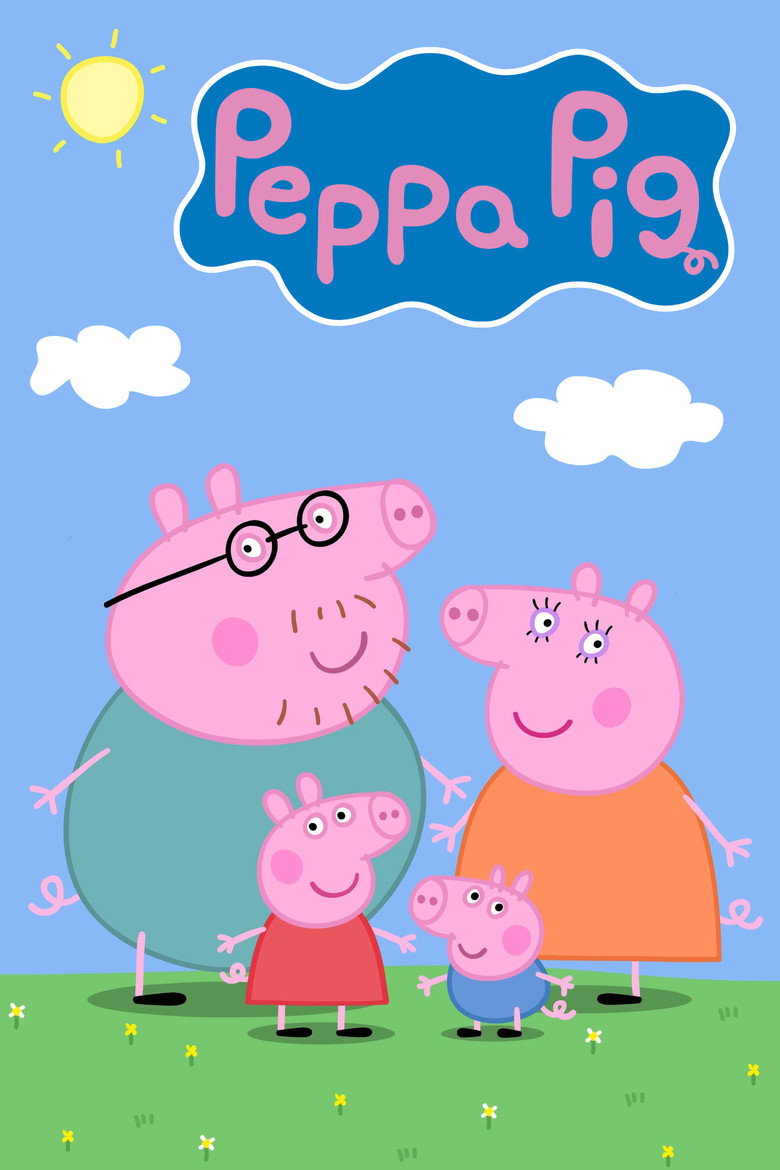
Harmless for one episode. A queue of them teaches a flat voice and a father who cannot do anything.
Peppa is five minutes and a feeling, which is sometimes what a very small child needs. The limit is the father, who fails at every ordinary task so the mother can smile. A boy can learn that joke too well.
One, then boots and an actual puddle. Do not let it be the voice of the afternoon.
Industry
3/10
Play, a jumping puddle, a parent going to work. Work is offscreen.
Household
5/10
A family at the table. The father is lovable and useless, on purpose.
Piety
2/10
None.
Courage
2/10
No stakes.
Republic
3/10
Friends, a school, a shop. Tiny civic life.
Temperance
6/10
Short. The want is small.
Truth
5/10
Feelings are named plainly. The naming is the value.
Stewardship
3/10
Very little to carry except a puddle.
Live historicallyGo outside. If it rains, put on the boots yourself. Leave the father in the television.
The satire is sharp. The numbers make the murder glamorous, which is the accusation and the temptation. Adults.
Roxie wants the stage more than she wants to be good, and the film does not lie about that want. Billy Flynn sells a jury the way he would sell a ticket. The merry murderesses are a chorus of women the city would rather watch than judge. That is a true picture of a public. It is also a picture so pleasurable that the public in your living room may join it.
Watch it for the cynicism, with adults who can hear the cynicism. If the room starts rooting for the acquittal as a happy ending, stop the disk and say the dull fact. She did it. The dance was the defense.
Industry
5/10
Show business as the real labor, and it is corrupt.
Household
2/10
Marriage is a prop.
Piety
2/10
The spotlight is the god.
Courage
4/10
Nerve in the service of a lie.
Republic
4/10
A court that wants a show.
Temperance
2/10
Appetite for fame.
Truth
7/10
It tells the truth that the crowd would rather be entertained than just.
Stewardship
3/10
The risk is that you leave humming.
Live historicallyDo not confuse applause with absolution.
Inventive kids with no adults in charge. The laugh is disorder.
Carly, Sam, and Freddie making something together in a room is a better picture than a child alone with an app. That is the credit. The debit is that the something is a prank, the guardian is a joke, and the apartment is a world without a parent who can say no. Children like it because it is lively. Lively is not the same as good.
If it is on, watch with them and stop on the episode where someone is actually hurt by the bit. Ask whether the laugh was worth it.
Industry
4/10
They produce a show, which is a kind of work, aimed at nothing but the click.
Household
4/10
A brother is the guardian. He is a child in a larger body, and the show likes him that way.
Piety
2/10
Nothing is looked up to except the audience count.
Courage
3/10
The schemes are bold and pointless.
Republic
4/10
Friends are loyal. The public is a studio audience.
Temperance
4/10
Gross-out is regular. It is milder than what came after.
Truth
4/10
It is honest that they are making noise. It calls the noise a career.
Stewardship
3/10
A childhood spent performing for strangers.
Live historicallyLet them record one kind thing and show it to a grandparent, not to a crowd.
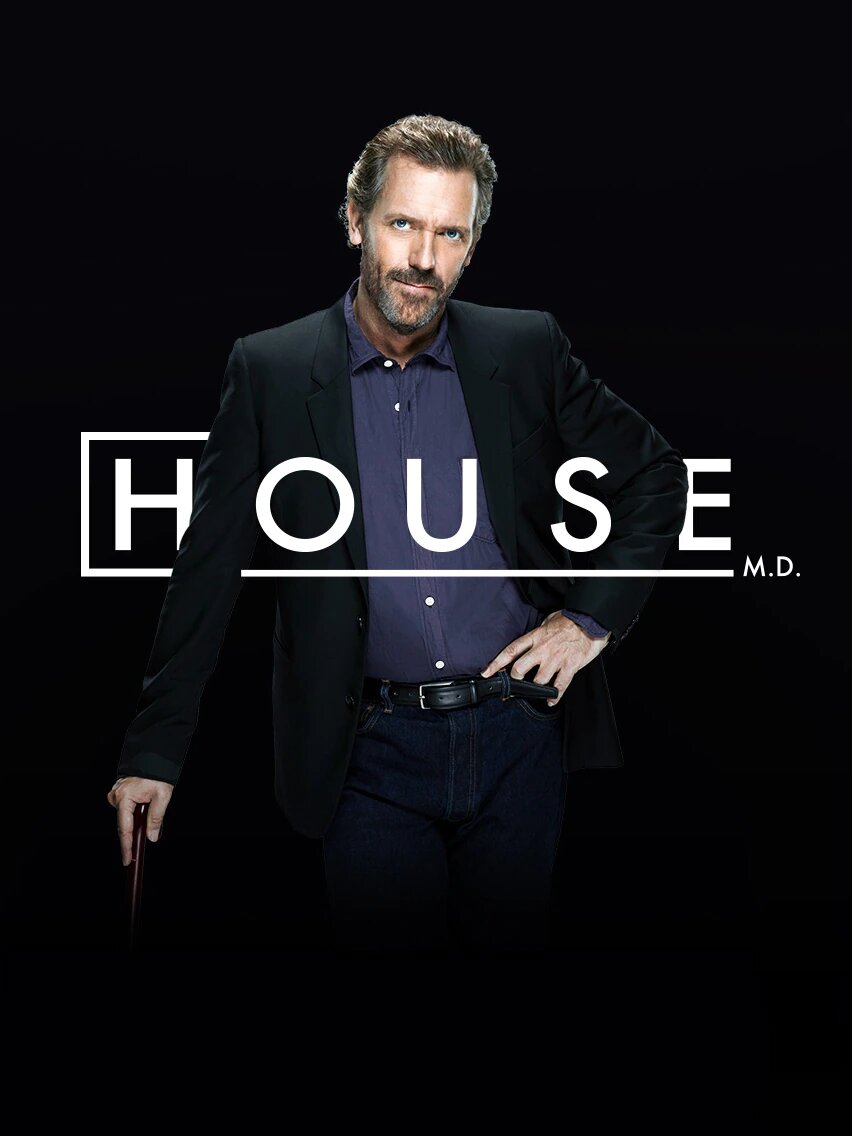
The mind is real. The show's excuse for contempt is not.
The differential is good television: a room of people refusing the easy answer. The personality sold with it is that a cruel man is cruel because he sees clearly. That is the flattering lie, and it has escaped the show into a lot of workplaces.
Watch an episode for the reasoning. Refuse the conclusion that manners are for people who cannot think.
Industry
7/10
Diagnosis as relentless work. The team earns the answer.
Household
2/10
He has no house. He damages the people who try to make him one.
Piety
1/10
Kindness is treated as the lie. Pain is treated as proof.
Courage
5/10
He will risk the patient and himself for the answer.
Republic
3/10
The hospital is a stage for one man's exemption from manners.
Temperance
2/10
Addiction is a plot engine. Misery is a brand.
Truth
6/10
The case is a search for what is actually wrong. That part is excellent.
Stewardship
2/10
He forms no one. He spends them.
Live historicallyBe precise at your work this week and decent to the person who is slower.
Family as a blood feud. The baby is the only argument for mercy.
It is a dynasty soap with fangs. The part that matters is the moment an immortal household has to decide that a baby is not a piece. Hold that moment if you watch any of it. The rest is throne-fighting, and throne-fighting is the same show under every costume.
Industry
3/10
Power is inherited, not earned. A few of them scheme like work.
Household
4/10
The family is the whole politics. Love and ownership are the same gesture.
Piety
1/10
The supernatural replaces any reverence.
Courage
4/10
They fight. The fight is usually for position.
Republic
3/10
A city ruled by a family is not a republic. The show half-knows.
Temperance
2/10
Appetite is the condition of being them.
Truth
4/10
They lie as a custom and sometimes admit the custom.
Stewardship
4/10
A child is the future they suddenly cannot kill. That is the one real turn.
Live historicallyIf you are watching for the family, ask whether they can love a child without owning her.
Survival skills, and a dare that needs the nudity and the camera. Adults, if anyone. Not a virtue because it is hard.
The skills are not fake. Fire, water, food, a shelter, the way a small injury becomes the event. The format is the problem: the nakedness is the title because the difficulty was not considered enough of a product. Two strangers, no bond worth the name, a producer between them and the rescue.
Not for any child. A grown person who wants the craft can learn the craft from people who are not selling the body. Hardship is not honesty. Sometimes it is a stunt.
Industry
7/10
The tasks are real: water, heat, food.
Household
1/10
Strangers. No house. Intimacy as exposure, not as love.
Piety
1/10
None.
Courage
6/10
They endure the hardship they signed.
Republic
1/10
No people but a crew.
Temperance
2/10
The body is the advertisement.
Truth
5/10
The difficulty is not faked. The reason for showing it is.
Stewardship
2/10
A skill you could learn without the contract. The show prefers the contract.
Live historicallyLearn a real outdoor skill with your clothes on, from a person, without an audience.
You do not need a new film to learn that obsession eats a house.
A dark poster and a word. The word is already a diagnosis: a mind that will not return to its work, its people, or the day. Films with this title usually follow the spiral and call the following honesty. Honesty would include the moment a friend tells them to stop, and would not need the spiral's every step.
The desk has not invented the object of this one. It does not have to. If the thing in the room is already a fixation, do not feed it a thriller about itself.
Industry
2/10
Obsession replaces work.
Household
2/10
It eats the household first.
Piety
1/10
A private idol.
Courage
2/10
Persistence in the wrong direction.
Republic
2/10
No neighbors.
Temperance
1/10
The vice is the title.
Truth
4/10
Naming it is the one honest move.
Stewardship
1/10
It leaves the loop running.
Live historicallyCut off one loop of attention that has started to feel like love.