Film · Prime Video · 2005
Corpse Bride
A vow is a real thing. The film knows it, then spends too long in the underworld's party.
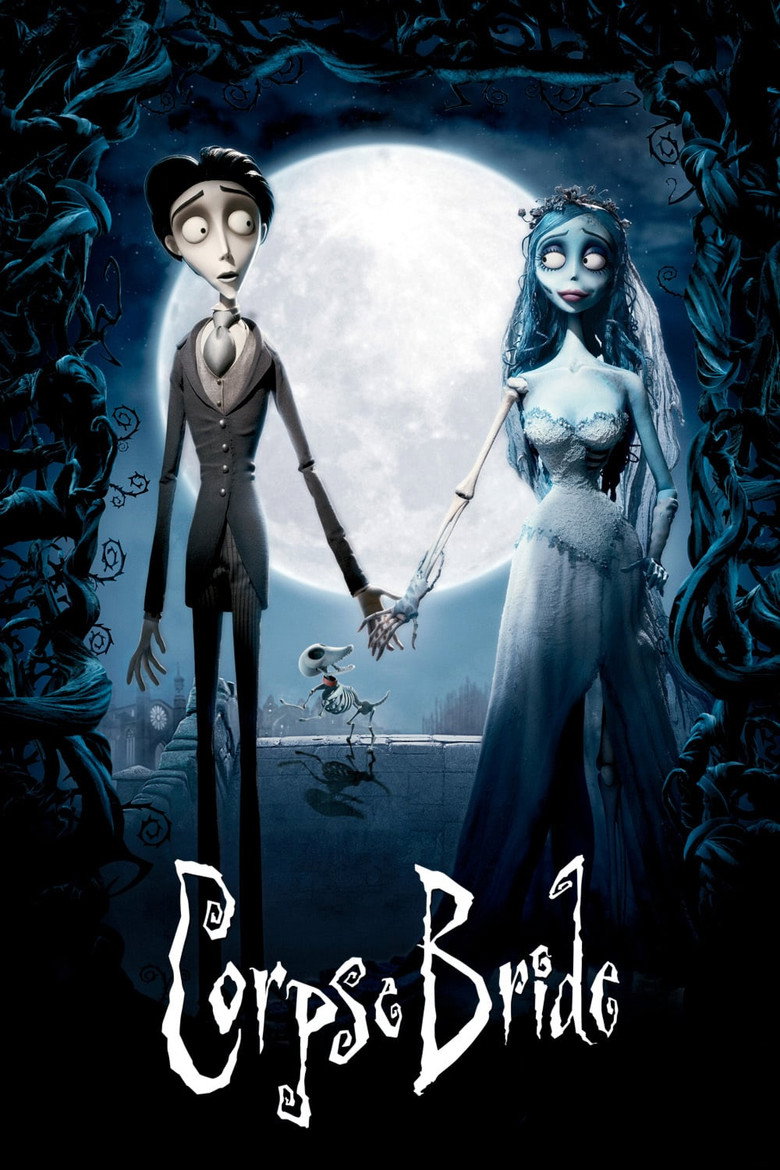
Victor's trouble starts because he treats the words of a marriage as a rehearsal he can mutter in a wood. The dead hear him. That is the right metaphysics for a comedy: a vow is not a draft. Emily is pitiable and she is also wrong to hold a living man to a mistake. The film lets her release him. That release is the decent ending.
The land of the dead is more fun than the land of the living, and the living wedding is a transaction between anxious parents. Count that. A marriage in this story is saved by mercy, not by the party downstairs. Watch it with older children. Do not let the skeletons outvote the vow.
The eight
Industry
5/10
A pianist, a wedding as a contract. Work is mostly nerves.
Household
6/10
Marriage is the subject. The parents treat it as a merger.
Piety
5/10
The dead have a claim because words were spoken. Then the claim is surrendered.
Courage
6/10
He tells the truth and goes back upstairs.
Republic
4/10
The town is a set of grasping families.
Temperance
6/10
The underworld's joke is appetite. He does not stay for it.
Truth
8/10
A mistaken vow is confessed, not hacked into a happy theft.
Stewardship
6/10
He returns to a living marriage. She lets the living go.
Live historicallySay your promises out loud before you make them, and only to the living person you mean.